

















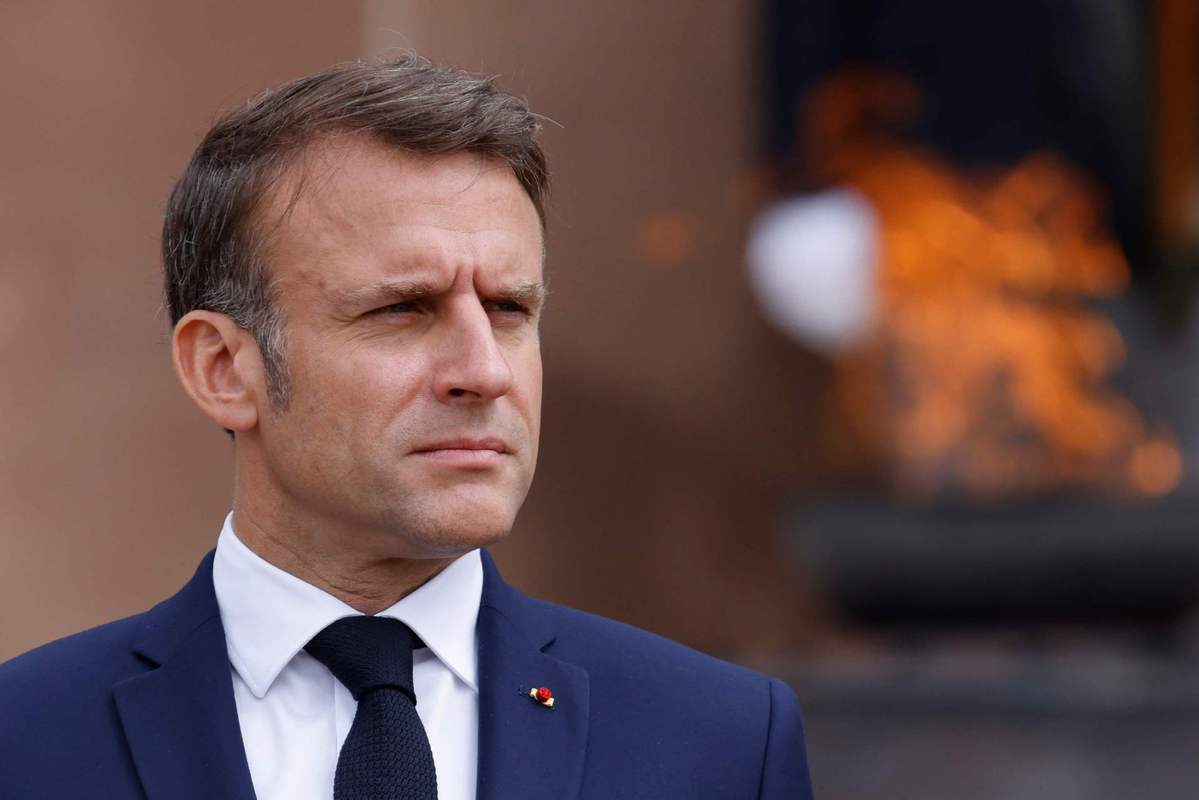
President Emmanuel Macron of France recently expressed concern about the possibility of civil conflict arising from the upcoming legislative elections.
In an interview on the podcast “Generation Do It Yourself,” he warned that if far-left or far-right parties were to gain power, it could lead to a dangerous escalation. Macron stressed that his centrist ruling coalition was the only one capable of averting such a scenario.
Macron criticized the National Rally party and France Unbowed party for promoting divisive policies that worsen societal tensions. He labeled them as extremist and cautioned against their rhetoric leading to further conflict. Macron emphasized that extreme solutions should not be the answer when facing difficulties in daily life.
Earlier this month, Macron dissolved the parliament and called for snap elections after his ruling coalition suffered a significant setback in the European Parliament elections due to immigration policies. Despite this, Macron expressed his determination to serve as president until the end of his term in 2027, highlighting the potential power shift if the opposition were to gain control of the legislature and government.
In a recent Ipsos poll, it was found that the National Rally is leading with 35.5% of French voter preference. Following closely behind is a leftist coalition, which includes France Unbowed, with 29.5% support. Macron’s alliance, on the other hand, has garnered 19.5% support.
Macron has accused the National Rally of attempting to reduce individuals to their religious or ethnic identity through their mass immigration policies. He believes that this stance could potentially lead the country into civil strife. Similarly, he has criticized France Unbowed, led by Jean-Luc Melenchon, for promoting divisions based on religious and ethnic lines. According to Macron, this also increases the risk of civil conflict.
Recognizing the demand for change among voters after the European Parliament election, Macron has emphasized the necessity for significant governance reform. However, he remains hopeful that the new government, which reflects the preferences of the voters, will be able to unite different republican factions in order to combat extremism.
Macron and his supporters have depicted their adversaries as dangerous and intolerant. Prime Minister Gabriel Attal echoed this sentiment, cautioning about the potential for violence if extremist groups were to prevail. Attal emphasized concerns about societal division, stating, “There are individuals in our nation who hold hatred and inclinations to target specific communities.”
Under Macron’s guidance, France has faced political upheaval, including ethnic unrest and violent demonstrations triggered by controversial policy changes, such as the influx of immigrants from the Middle East.
As France gears up for the initial round of legislative elections on Sunday, followed by the second round on July 7, the stage is set for a tense electoral showdown.