


















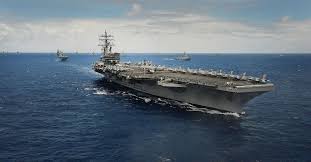
China initiated the sea trial of its first domestically-built aircraft carrier, the Fujian, on Wednesday.
As per a report from the South China Morning Post, referencing state news agency Xinhua, the Fujian was unmoored from its dock at the Jiangnan shipyard in Shanghai around 8 am.
Launched in June 2022, the Fujian is China’s inaugural aircraft carrier equipped with electromagnetic catapults, enhancing its ability to launch aircraft more frequently.
The report mentioned that initial signs of preparations were observed on Tuesday with the announcement of rare maritime traffic controls around the mouth of the Yangtze River, effective from 4.30 am to 3 pm on Wednesday, which military experts suggested could be in preparation for the trial.
The Jiangnan shipyard, responsible for constructing the carrier, is located at the mouth of the Yangtze. Additionally, maritime authorities issued a subsequent notice indicating that “military operations” are set to occur in the East China Sea from 7 am on 1 May until 9 am on 9 May, designating a specific water area where unrelated vessels are prohibited from entering.
According to the report, citing Xinhua, the initial sea trials will focus on testing the reliability and stability of the aircraft carrier’s propulsion and electrical systems.
The South China Morning Post report quoted Xinhua as saying, “Since its launch in June 2022, the Fujian has completed its mooring trials, outfitting work, and equipment adjustments, meeting the technical requirements for sea trials.”
The introduction of China’s third aircraft carrier, the Fujian, represents a noteworthy achievement as it is the country’s first domestically designed carrier.
China has ambitious plans to expand its carrier fleet to six by 2035, aiming to enhance its naval capabilities and potentially become the second most powerful naval force globally, following the United States.
The Fujian’s inaugural trial marks the beginning of an extensive testing phase, which is expected to last several years before the carrier is considered fully operational. In comparison, China’s existing carriers, the Liaoning and the Shandong, underwent 10 and nine trials respectively.
In contrast, the USS Gerald R. Ford, the only other carrier equipped with electromagnetic catapults, was commissioned in 2017 but did not embark on its first deployment until 2022.
Originally a Soviet Kuznetsov-class vessel, China’s first carrier, the Liaoning, underwent significant modifications before being commissioned in 2012. Subsequently, the PLA Navy constructed the Shandong as its second carrier. While the Fujian follows a conventional carrier design like its predecessors, it distinguishes itself as a “supercarrier” with advancements surpassing its smaller predecessors, which relied on less efficient ski-jump ramps for aircraft takeoff.
Amidst these developments, Taiwan’s defense ministry has expressed concerns about the capabilities of the Fujian, highlighting the potential threat it poses to the island. Some analysts have even labeled the Fujian as a significant maritime concern for Taiwan, as reported by Japan Times.
According to a report by Japan Times, Taiwan’s Defence Ministry emphasized in its annual report last year that the presence of Fujian could potentially strengthen China’s ability to encircle the island. Consequently, this could hinder or prevent the US military and its allies from providing assistance to Taipei in the event of a Chinese incursion.
Nevertheless, despite China’s progress in aircraft carriers, there are significant challenges that need to be addressed. The report mentioned that observers have highlighted a significant gap between the level of training of sailors and the requirements of real combat situations.